
By Clayton Lau
With every generation movie stars have worn them. Rock stars have shredded them. And celebrities have stripped them. Paris anyone? The t-shirt has been the fashion essential for over 70 years and probably another 70 years and more. So how did it get here and what does the future hold?
Origins - Call to Arms in Short Sleeves
The t-shirts humble beginnings can be traced back to the early 1930's. WWI European soldiers entrenched in mud wore the t-shirt as an undergarment. The advantages of the light cotton underwear were quickly adopted by the US military. By WWII the US Army and Navy had supplied the t-shirt as standard issue. T-shirts at the time were still considered underwear and not worn casually.
1950's - Cult Movie Bad Boys
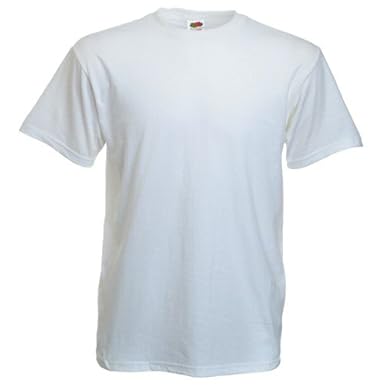
With the help of a sweating Brando in the 1951 film "A Streetcar Named Desire", and later a brooding James Dean in "Rebel without a Cause" the t-shirt had moved to mainstream youth culture. By the time Elvis had gyrated, the teenage rebellion seed was planted and along with denim jeans the t-shirt had become the hot fashion statement.
1960's - From Beatniks to Vietnam
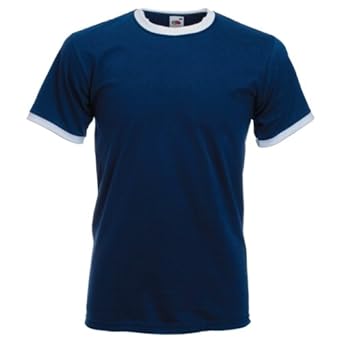
The 60's were well known for social upheavals and political events. Many subcultures developed from Beatniks, Mods, Rockers to eventually Hippy's. During the early 60's The Beatles had ignored the t-shirt opting for their trademark suits. But by the late 60's the haze of the Hippy generation had created the tie dyed t-shirt. Dunked in several buckets of colourful dyes it became a symbol of the psychedelic era and possibly one of the worst fashion crimes of the century. Other t-shirt styles were born including the ringer, muscle, v-neck and tank t-shirts. The invention of screen printing saw social and political slogans expressed on apparel especially for the anti war sentiments of Vietnam.
1970's - Your Disco Needs You
Rock emerged beating to death the Hippy's with their own sandals. The black t-shirt was now standard issue with printed logos of stadium rock Supergroups such as Led Zeppelin, ACDC and Pink Floyd. In the course of the mid 70's Surf apparel started appearing. Niche surfing brands such as Lightning Bolt, Billabong, Rip Curl and Quiksilver would later become big corporations. Athletic giants Adidas, Puma, Reebok and Nike also gained prominence with their branded printed tees, shoes and apparel. The decade was also known for it's many classic t-shirt motto's including the Smiley face, "Sh*t Happens" and "I love NY" which would see a revival after 911. Fonzie in the TV sitcom Happy Days paid homage to Brando and Dean 20 years before by reintroducing the blank white tee. In 1977 the Star Wars phenomenon had exploded. Star Wars t-shirts were everywhere for the tween. But for the twenty something's there was of course Disco. With movies like Saturday Night Fever and Thank God it's Friday the flared trousers and tight t-shirts became the usual 70's silhouette.
1980's - Fashion beep beep
The influence of music had an extreme effect on fashion in the 80's. The New Romantic movement in the early 80's had passed on the simple tee, opting for a more extravagant look. Remember Flock of Seagulls? On the opposite spectrum the Punk movement was in full flight with black ripped up tees, Doc Marten boots, piercing and lots and lots of hair gel.
By the mid 80's the Japanese fashion influence had caught on. Designers Yohji Yamamoto and Issey Miyake had reinvented the t-shirt to a large oversized kimono style cut. Katherine Hamnett in 1984 took it even further with the notable "Choose Life" print which was immediately embraced by Wham! in their video "Wake Me Up Before you Go Go". Not long after Frankie said "Relax" and The Smiths said "Meat is Murder" regurgitating the political t-shirt.
From the oversized tee stemmed the woman's "t-shirt dress" which developed into neon and day glow colours.
Springsteen brought the jeans and a t-shirt back to basics with rolled up macho sleeves during his Born in the USA phase. For the MTV generation Armani took the t-shirt to high fashion wearing the tee underneath a suit jacket. Of course the suit jacket sleeves were rolled up ala Crocket and Tubbs Miami Vice style (parodied exceptionally in that Friends episode).
1990's - Come As You Are
Surf tees saw a rebirth pioneered by new brands Stussy and Mossimo. Also adopted by Skaters long sleeve t-shirts became ever more popular. The Hypercolor t-shirt fad where the fabric changed colour with heat was very popular. Entertainingly if the wearer worked up a sweat big unsightly patches of colour change would occur around the armpits.
Again the influence of music came back into play. Hip Hop proved it wasn't a phase adopting at first Adidas as a brand. Later various Rap specific brands emerged such as Sean John and Phat Farm. Dance, Trance and DJing gained prominence and tighter and sleeveless t-shirts worn with baggy pants become the mode. Grunge anti-fashion also took the tee in another direction with a dark worn appearance.
21st Century Brand Child
According to branding experts Al and Laura Ries in the book "The Origin of Brands", as a product category evolves the category then diverges further into more categories. Like a tree some branches may whither and die while others will further grow and diverge again. This is probably best explained with the invention of the TV. The TV has diverged from the humble B&W television to many other categories. We now have CRT, Plasma, LCD, HDTV, Rear Projection, portable and widescreen.
There is no doubt that divergence has affected the t-shirt. The shape of the t-shirt itself has diverged to anywhere from tight, regular, hip hop loose to baby tee. With the advent of the Internet we've seen a boom in smaller t-shirt label startups. Now there are so many categories we are almost overwhelmed for choice.
Some t-shirt/apparel categories are:
Skate Brands: Hurley International, Globe, Element, Volcom, World
Surf Brands: Billabong, Mambo, Rip Curl, Rusty Quiksilver which has diverged to girl surf category Roxy.
Snowboard Brands: Burton, Salomon
Hip Hop Brands: Sean John, Ecko, G-Unit, Phat Farm.
American Retro Classic Brands: Dickies, Von Dutch, Harley Davidson.
Martial Arts Brands: Drunken Munky and various Bruce Lee and Chuck Norris logos.
Funny t-shirts: Vote for Pedro. Jesus is my homeboy, White Castle.
Internet Brands: T-shirt Hell, Café Press, Threadless.
Sport Brands: Puma, Nike, Adidas, Reebok.
American Basic Brands: Hanes, American Apparel, Fruit of the Loom and GAP.
High fashion Brands: Tommy Hilfiger, Gucci, Armani, Ralph Lauren, Calvin Klein.
The Future
So which category branches will whither and die and which will survive to the next decade? Would you rather look like Eminem, Kelly Slater or Tony Hawks? And what is a t-shirt anyhow? Is it a simple apparel design with a coloured screen printed artwork featuring a hobby, sport, band or affluence that you may identify with? Or is it a product branded, marketed and directly mass produced for your particular demographic? Either way T-shirts have become a billion dollar industry.
What next for the now not so humble tee? We're seeing 21st century fibres like Gortex, Merino wool and Lycra blends being used. As for logos some growing trends seem to be the Video Game t-shirts, Internet t-shirts and Poker t-shirts. Will these be the next surf or skate brands? Quite possibly. Will others develop out of our favourite past times? Could there even be a Sudoku brand, a MySpace brand, Porn brand, or an iPod brand of t-shirts? Perhaps design your own the new black? One thing is certain; history has shown us that there will be even more diversification far into the next decades. The power of the t-shirt has never been greater. Awesome!
Clayton Lau is administrator and webmaster of t-shirt website http://sashionswomensshirt.blogspot.com/
Article Source: http://EzineArticles.com/?expert=Clayton_Lau
http://EzineArticles.com/?The-T-shirt-Evolution&id=260352